Family travel guide
Glenelg — a tram, a jetty, a hold-my-hand promenade
A family day on Adelaide’s coast that works like Fremantle: an easy ride, water you can walk beside, and a way home that children already understand.
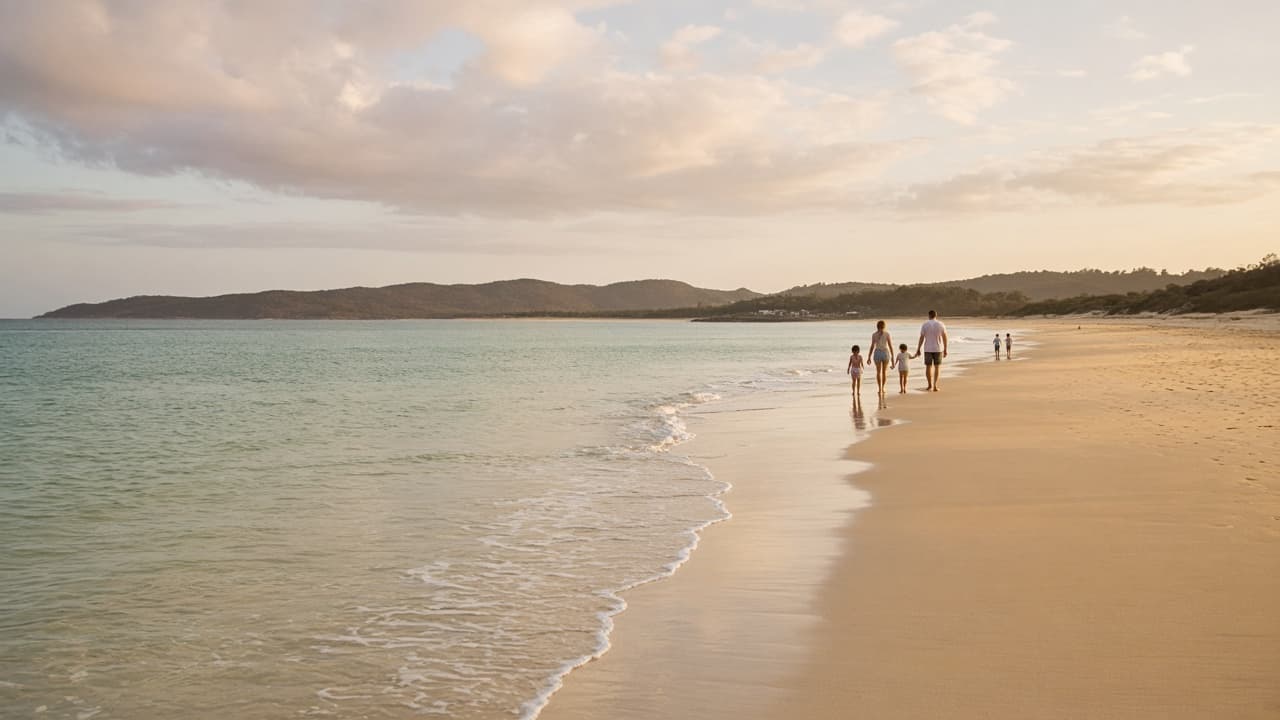
Glenelg is the tram version of the Fremantle idea. Children understand a ride. The ride delivers a jetty, a foreshore, and a beach that is more promenade than wilderness. That is a feature. Wilderness is another day, with more adults and a different map.
We will not rank it among “best beaches.” We will not invent a festival calendar. Check current tram information with the operator. Check swimming conditions on the day.
The tram is the first attraction
Sit. Watch. Get off when you mean to. The return tram is the exit you promised, same as Fremantle’s station. Do not add a second suburb “while you are south.” The nap does not care that you came all this way.
Promenade logic
Shade, toilets, a place to sit, a hold-my-hand edge. The jetty is a walk with a rail. Rails are toddler infrastructure. Wind exists; hats leave. Pack the hat that stays.
Flags, if present, are the swim. If the water is not kind, the promenade still is. Ice-cream logic applies: sticky is information. Leave while it is still good.
Food and the 1pm problem
Eat early. Foreshore queues at peak will take the rest budget. A picnic is allowed. A bakery is allowed. A long celebratory lunch is a different family.
Practical
Child restraints if you drove instead: South Australian road-safety pages, not this essay. Health: Healthdirect. Weather: official bureau. The Australia hub files Glenelg beside Fremantle and Coolangatta as usable domestic patterns. Steal the pattern even if you never ride this tram: a public ride, a water edge, an exit the child can believe in.
A tram day
Ride. Jetty with a rail. Promenade sit. Flags if they fly. Eat early. Return tram when eyes square. Do not add a second suburb. Wind takes hats. Official tram info, official weather, SA road rules if you drove. Glenelg is Fremantle with a jetty. Steal the pattern even if you never come: public ride, water edge, exit the child believes.
A planning notebook for Glenelg
Start with the scene you are actually buying: a tram, a jetty rail, a promenade sit. If your notes still say “see everything,” you are not planning Glenelg yet. You are collecting. Collecting is how afternoons collapse. Write the scene in one sentence a child could hear. If they would not understand the sentence, the plan is still for a different family.
The tool that matters here is the return tram as a believed exit. It is not glamorous. It does not photograph. It is how 3pm stays kind. Put it on the list before you put a viewpoint on the list. If you cannot afford the tool — in money, in luggage, or in patience — you cannot afford this version of the trip. Choose a smaller version. Smaller is not failure.
The mistake this page exists to prevent is adding a second suburb while you are south. Families do it because the internet rewards it and because adults remember being the kind of traveller who could improvise. Children are not a failure of improvisation. They are a design constraint. Design for them and the day looks ordinary. Ordinary is the point.
Official reading, not optional: tram operator info; SA road-safety pages if you drove. Read it when you book and again the week you go. Friends describe another year. Forums describe another child. You have this child, this year, this rule. If a clinician or an authority says no, that is the plan. This notebook will not argue.
A morning that works looks like this: ride, rail, sit, eat early, ride back. If you only do that morning, you have done the trip. Add extras only if everyone still has a self. Extras are how you pay twice for the same day — once in money, once in recovery.
Say no to a long celebratory lunch at 1.30pm. Say yes to hold-my-hand infrastructure. Those two sentences are the whole method wearing local clothes. You can screenshot them. You cannot screenshot judgement. Judgement is sitting down when the sand is too hot, leaving when the eyes go square, watching water instead of filming it, and checking the living page instead of a memory of this one.
If you need a destination after this notebook, return to the hub that sent you here and pick the radius that matches the children you have, not the children you remember being. If you need a stay, send the dull email. If you need a flight, open the infant page. If you need health, stop reading travel writing. The notebook ends where the authority begins.
Pack less than your anxiety wants. Walk slower than your pride wants. Eat earlier than the room considers stylish. Leave while it is still good. That closing is true on a Fremantle harbour, a Sanur path, a Fiji lagoon, a Glenelg tram, a New York playground, a Gold Coast corner, a park queue, and a hire-car driveway. It is not a personality. It is a family travel method, and it is the reason this URL still deserves to resolve.
When you get home, the test is not a stamp count. The test is whether you would repeat a smaller version. If yes, the design worked. If no, change the design: fewer hops, closer water, more kitchen, fewer temples, a later year. The children will still be children. The places will still be places. You do not have to win them in a weekend.
Write one sentence in the notes app before you pay: the 3pm sentence. If you cannot write it, you are not ready to pay. That is not fear. That is planning. Planning is the only adventure this site will sell, and it does not require a ranking to be real.
Keep a short list of what you will not argue about on the trip: bedtime closer to home than to the restaurant; water you can stand in; one paid thing a day; official pages when a topic can hurt. Arguments with a tired child in a queue are expensive. Agree the list at the table at home, in the language you actually speak to each other, then stop reopening it in the sand.
If you are travelling with another adult, split watching and logistics on purpose. One person can be the camera or the coffee. The other person cannot also be the pool fence at the same time. Solo parents should shrink the radius until watching is geometrically possible. That is not a lesser trip. That is geometry.
Weather will edit the notebook. Heat, wind, rain, a fire page, a cyclone page, a swell that arrived overnight: the living warning wins. Swap in the indoor room, the kitchen, the train ride that was already an outing. If your plan cannot survive weather, it was a photoshoot. Photoshoots are optional. Children are not.
When this URL loaded, you may have wanted a shortcut. The shortcut is the 3pm sentence, the tool named above, and the official link. Everything else on the page is there so you do not have to learn those three the hard way in a terminal at midnight. Use them in the afternoon, at the table, before you pay.
Another notebook for Glenelg
Start with the scene you are actually buying: a tram, a jetty rail, a promenade sit. If your notes still say “see everything,” you are not planning Glenelg yet. You are collecting. Collecting is how afternoons collapse. Write the scene in one sentence a child could hear. If they would not understand the sentence, the plan is still for a different family.
The tool that matters here is the return tram as a believed exit. It is not glamorous. It does not photograph. It is how 3pm stays kind. Put it on the list before you put a viewpoint on the list. If you cannot afford the tool — in money, in luggage, or in patience — you cannot afford this version of the trip. Choose a smaller version. Smaller is not failure.
The mistake this page exists to prevent is adding a second suburb while you are south. Families do it because the internet rewards it and because adults remember being the kind of traveller who could improvise. Children are not a failure of improvisation. They are a design constraint. Design for them and the day looks ordinary. Ordinary is the point.
Official reading, not optional: tram operator info; SA road-safety pages if you drove. Read it when you book and again the week you go. Friends describe another year. Forums describe another child. You have this child, this year, this rule. If a clinician or an authority says no, that is the plan. This notebook will not argue.
A morning that works looks like this: ride, rail, sit, eat early, ride back. If you only do that morning, you have done the trip. Add extras only if everyone still has a self. Extras are how you pay twice for the same day — once in money, once in recovery.
Say no to a long celebratory lunch at 1.30pm. Say yes to hold-my-hand infrastructure. Those two sentences are the whole method wearing local clothes. You can screenshot them. You cannot screenshot judgement. Judgement is sitting down when the sand is too hot, leaving when the eyes go square, watching water instead of filming it, and checking the living page instead of a memory of this one.
If you need a destination after this notebook, return to the hub that sent you here and pick the radius that matches the children you have, not the children you remember being. If you need a stay, send the dull email. If you need a flight, open the infant page. If you need health, stop reading travel writing. The notebook ends where the authority begins.
Pack less than your anxiety wants. Walk slower than your pride wants. Eat earlier than the room considers stylish. Leave while it is still good. That closing is true on a Fremantle harbour, a Sanur path, a Fiji lagoon, a Glenelg tram, a New York playground, a Gold Coast corner, a park queue, and a hire-car driveway. It is not a personality. It is a family travel method, and it is the reason this URL still deserves to resolve.
When you get home, the test is not a stamp count. The test is whether you would repeat a smaller version. If yes, the design worked. If no, change the design: fewer hops, closer water, more kitchen, fewer temples, a later year. The children will still be children. The places will still be places. You do not have to win them in a weekend.
Write one sentence in the notes app before you pay: the 3pm sentence. If you cannot write it, you are not ready to pay. That is not fear. That is planning. Planning is the only adventure this site will sell, and it does not require a ranking to be real.
Keep a short list of what you will not argue about on the trip: bedtime closer to home than to the restaurant; water you can stand in; one paid thing a day; official pages when a topic can hurt. Arguments with a tired child in a queue are expensive. Agree the list at the table at home, in the language you actually speak to each other, then stop reopening it in the sand.
If you are travelling with another adult, split watching and logistics on purpose. One person can be the camera or the coffee. The other person cannot also be the pool fence at the same time. Solo parents should shrink the radius until watching is geometrically possible. That is not a lesser trip. That is geometry.
Weather will edit the notebook. Heat, wind, rain, a fire page, a cyclone page, a swell that arrived overnight: the living warning wins. Swap in the indoor room, the kitchen, the train ride that was already an outing. If your plan cannot survive weather, it was a photoshoot. Photoshoots are optional. Children are not.
When this URL loaded, you may have wanted a shortcut. The shortcut is the 3pm sentence, the tool named above, and the official link. Everything else on the page is there so you do not have to learn those three the hard way in a terminal at midnight. Use them in the afternoon, at the table, before you pay.
Ask a planning question
This is an independent guide, not a booking desk. If a page is unclear, or you want a topic added, send a note — we read every message.